
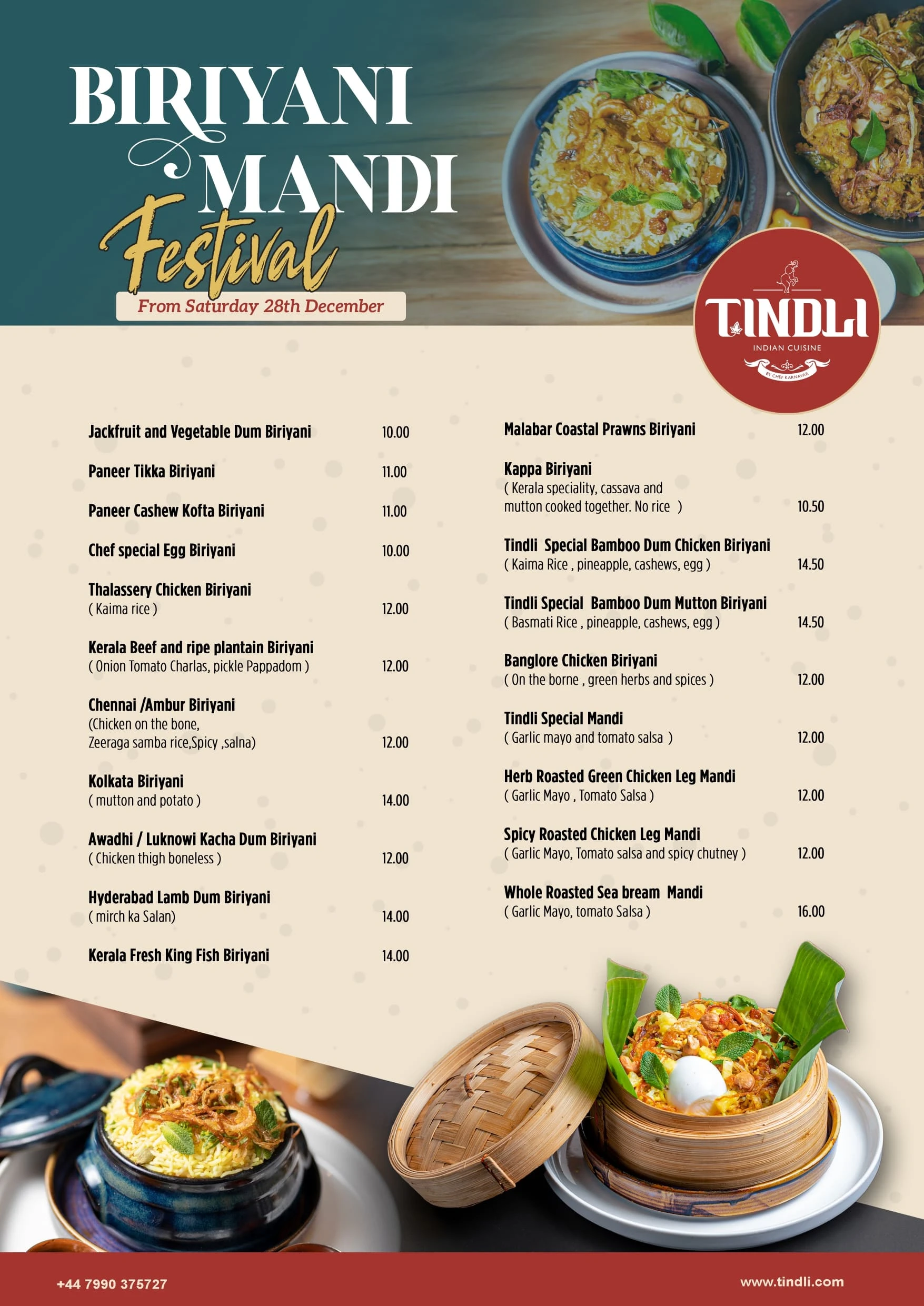
In the world of slow-cooked rice dishes, two traditions stand apart as true masterpieces: the legendary Biryani of the Indian subcontinent, and the ancient Mandi of the Arabian Peninsula. Both celebrate the art of patience — of allowing spices, aromatics, and smoke to weave their magic over hours of careful cooking. And now, for the first time in Croydon, Tindli Restaurant brings both traditions together in one spectacular event: the Biryani & Mandi Fest.
If you love rice dishes — if you believe that truly great food cannot be rushed — this is the event you've been waiting for.
Available now at 5–7 St James's Road, Croydon CR0 2SB. Check out the full menu below and book your table before it sells out.
Reserve Your Table →
What Is Mandi — and How Is It Different from Biryani?
Many people encounter Mandi for the first time and assume it's simply another style of biryani. While both dishes are celebrations of rice and slow-cooking, they come from entirely different culinary traditions — and the differences are profound.
🏭 Mandi
- Origin: Yemen & Arabian Peninsula
- Technique: Slow-cooked in a sealed underground pit (tandoor)
- Rice: Long-grain basmati, cooked in meat broth
- Spices: Hawaej spice blend — turmeric, cardamom, cloves, cumin
- Flavour: Delicate, smoky, aromatic — light in colour
- Texture: Meat falls off the bone; rice is fluffy and separate
- Served with: Sahawiq (green chilli sauce), soup, salad
🍛 Biryani
- Origin: Mughal India, Persian influence
- Technique: Dum cooking — layered and sealed in a pot
- Rice: Aged basmati, par-cooked then layered
- Spices: Saffron, rose water, fried onions, whole spices
- Flavour: Rich, complex, deeply spiced — golden colour
- Texture: Layered — rice absorbs meat juices from below
- Served with: Raita, salan, kachumber salad
Put simply: Biryani is about richness and layering; Mandi is about purity and smoke. They are two different philosophies of what rice and meat can become when treated with the utmost care and respect.
The Ancient Art of Mandi Cooking
The word "Mandi" comes from the Arabic nada, meaning dew — a reference to the soft, tender, almost dewy texture of the meat when it emerges from the pit. Traditional Mandi is cooked in a tandoor (a sealed underground clay pit), where whole lamb or chicken is suspended above a bed of spiced rice. The pit is sealed and the meat slow-cooks over smouldering wood coals for four to six hours.
The magic of Mandi lies in what happens inside that sealed space. As the meat cooks, its juices, fat, and rendered spices drip slowly down through the sealed chamber and into the rice below. The rice absorbs every drop — not from direct immersion, but from this gentle, fragrant rainfall. The result is rice that is impossibly flavourful yet remains light and separate.
How Chef Karnavar Prepares Mandi at Tindli
At Tindli, Chef Karnavar has adapted the traditional Mandi technique for our kitchen, staying as faithful as possible to the original method while ensuring the highest standards of quality and consistency.
Marinating the Meat (12 hours)
Whole chicken or lamb is marinated in Hawaej — our house-made blend of turmeric, black pepper, cardamom, cumin, cloves, and cinnamon. The meat is left to absorb the spices overnight.
Preparing the Broth
A rich broth is prepared with whole spices, onions, dried limes (loomi), and tomatoes. This broth forms the base in which the basmati rice will eventually cook — infusing every grain with deep, savoury flavour.
Slow-Cooking in the Sealed Chamber (4–6 hours)
The marinated meat is suspended above the spiced rice in a sealed vessel. It slow-cooks over indirect heat, with the dripping juices continuously flavouring the rice below. We finish with a live coal smoking step — introducing a gentle smokiness that is the hallmark of authentic Mandi.
Plating and Garnishing
The Mandi is plated on a large traditional tray — meat placed atop the fragrant rice — and garnished with fried onions, toasted almonds, raisins, and fresh coriander. Served alongside traditional Sahawiq chilli sauce and a side salad.
The Biryani & Mandi Fest Menu
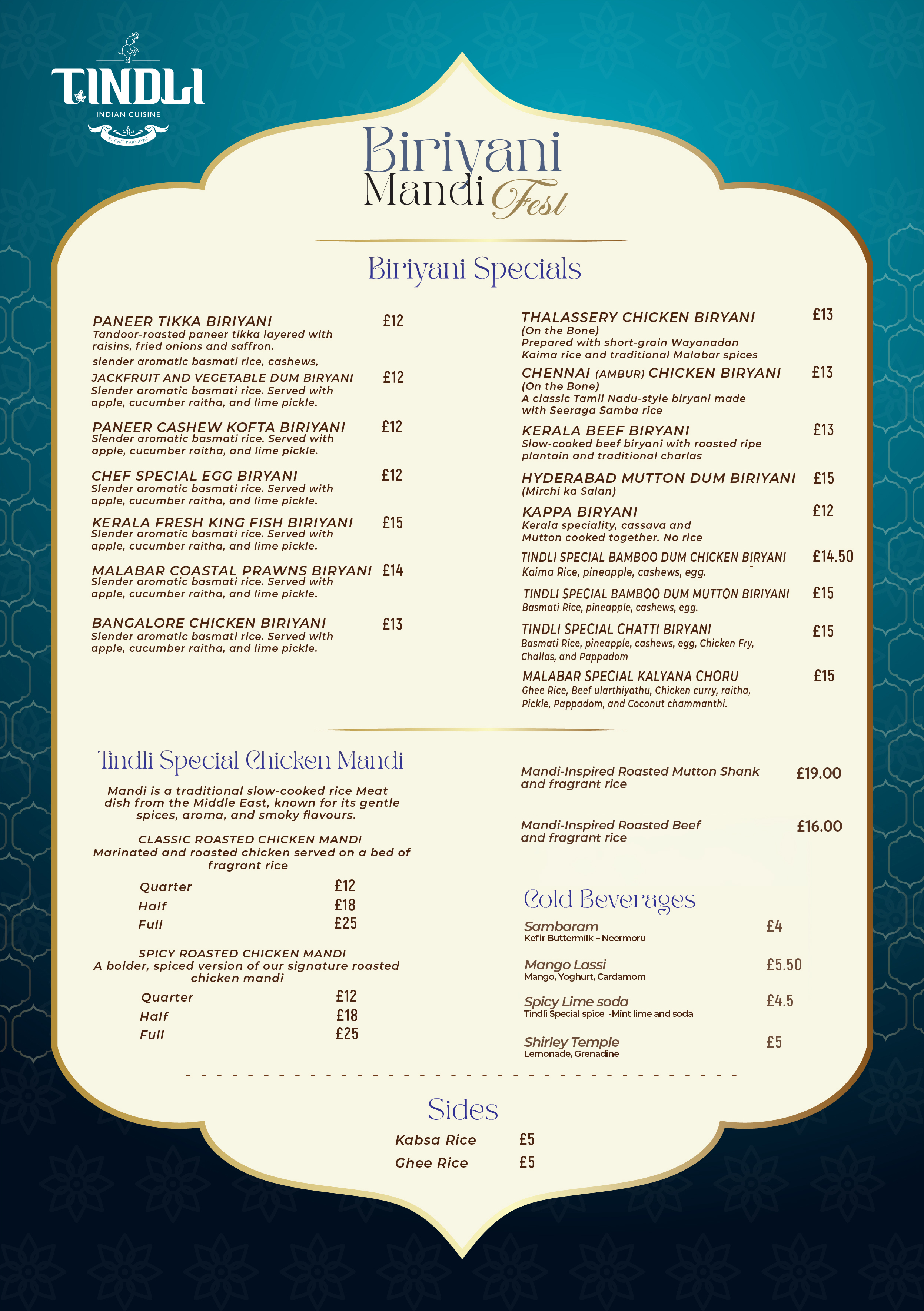
Our Biryani & Mandi Fest menu is a celebration of these two magnificent traditions. Here is a look at what we're serving:
The Biryani Side of the Fest
Alongside Mandi, our Biryani & Mandi Fest also showcases Tindli's acclaimed Biryani — made using the traditional dum pukht method that has been refined by Chef Karnavar over decades of cooking.
Our Biryani menu features:
- Thalassery Biryani — Kerala's own Biryani style, made with fragrant Kaima rice (not basmati), green chillies, shallots, and coconut. A lighter, more aromatic Biryani unique to Malabar.
- Hyderabadi Chicken Biryani — the classic dum-cooked Biryani with saffron-stained rice, caramelised onions, and slow-braised chicken.
- Mutton Biryani — premium lamb cooked low and slow, layered with aged basmati and the full Biryani spice profile.
- Vegetable Dum Biryani — a riot of seasonal vegetables, paneer, and aromatic rice for our vegetarian guests.
Why This Is the Best Biryani & Mandi in Croydon
Croydon has a vibrant and competitive Indian food scene, but we can say with confidence that no other restaurant in Croydon — or in South London — is currently offering authentic Mandi alongside premium Biryani in a single dedicated festival menu. This is a genuinely unique dining experience.
Everything at Tindli is made from scratch. Our spice blends are ground in-house. Our rice is sourced from specialist suppliers. Our meat is locally sourced from ethical UK farms. And our cooking times are never compromised — we simply will not serve a Mandi that hasn't had its full four to six hours in the heat.
This is slow food done right. This is Biryani & Mandi the way it was always meant to be.
Experience the Biryani & Mandi Fest at Tindli Croydon
Available now. Limited covers — book your table to guarantee your Mandi or Biryani.
5–7 St James's Road, Croydon CR0 2SB | +44 7990 375727
Visit Us in Croydon
Tindli by Chef Karnavar5–7 St James's Road
Croydon, CR0 2SB
+44 7990 375727
info@tindli.com
We are a 5-minute walk from East Croydon station, easily accessible by train, tram, and bus from across South London.